22/11/16 – Continuity Editing
Different styles of continuity editing can have contrasting effects on a film or television programme. It is important that the viewer can follow what is happening on-screen and doesn’t become disorientated by the confusing placement of actors or props, or cuts that subconsciously imply something has happened when in fact it hasn’t. All these factors, and more, are a part of continuity.

Graphic continuity is when two shots are shown one after the other, with similarities in actions or layout. This type of continuity editing happens so often that it is expected and often goes unnoticed. The actor starts an action in one shot, such as opening a door, and the action is completed in the next shot – the camera cuts to the other side of the door and we see them walk through. This style of editing is only really noticed by a viewer if it is pulled off badly – for example, if the second shot jumps ahead too much, or the action is almost completed in the first shot and then only halfway complete in the second.
Rhythmic continuity is often coupled with the background music. The use of jump cuts and other montage features often shows a particularly slow or fast theme – for example, a car chase scene may make use of a series of fast cuts back and forth between the action, whereas a sad scene in a movie may use only one or two cuts in a whole scene.

Spatial continuity incorporates a number of different rules. For example, when filming a conversation between two people using over-the-shoulder shots, each actor must stay on their respective side of the screen – this is known as the 180 degree rule. Another important rule is to keep the eye-line of the characters the same from shot to shot, especially in dialogue-heavy sections. Eye-lines on different levels would break the continuity. Another spatial continuity technique can give the impression that people are facing each other, even when they are in different locations or in different times. For example, a character looking into a mirror, and another character looking into their mirror from the other direction in another place.
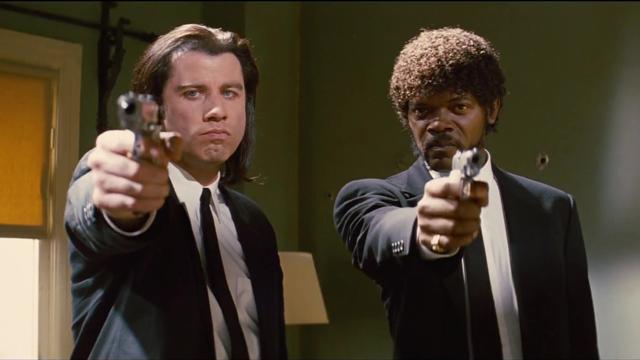
Temporal continuity is where the timeline, from the perspective of the viewer, is not in chronological order. For example, the on-screen characters don’t know what has happened, but the viewer has been shown the end result already. Visual examples of this style of editing include excerpts from Westworld, Memento and Pulp Fiction.
References and Further Reading:
- https://justingrant373.files.wordpress.com/2014/01/180-degree-rule.jpeg?w=584
- http://pmd205465tn.download.theplatform.com.edgesuite.net/Miramax/279/95/hiamxwYTqGi5jcQNYzQwZxZRYqvKxtw5_h264_3800_640x360_352124483894.jpg
- http://nofilmschool.com/2015/12/10-different-kinds-montages-can-help-make-your-film-more-dynamic
- http://veracity24.tumblr.com/post/39686928799
 tobysanderson.co.uk