01/11/16 – Lighting
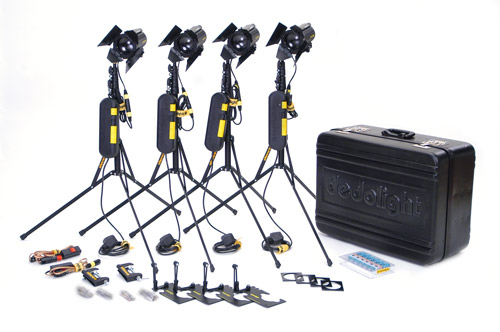
In today’s lab we discussed white balance, colour temperature and different lighting techniques and styles. Using a set of Dedo lights to create a standard three-point lighting setup, we experimented with changing the white balance on the Sony FS-7 camera. We had already learned last year that bright sunlight on a clear day has a high colour temperature of around 6,000K, shade on a clear day has a colour temperature of 10,000K, and a candle has a significantly lower colour temperature of around 1,500K, with a range of values in between for a cloudy day, as well as tungsten and incandescent bulbs. Vhanging the colour temperature can also achieve some cinematic effects.

We appreciated that when changing the colour temperature, our eyes have the opposite effect to the camera. For example, when filming outside on a clear day with a colour temperature of around 6,000K, but trying to replicate a late evening colour temperature, we initially expected to have to decrease the white balance to achieve the effect. However, the camera works in the opposite way to our eyes, and in fact the while balance would have to be increased – around 10,000K would be suitable.

We also learned about how coloured gels can be used over the lights to compensate for a wrong white balance, or when filming at the wrong time of day. For example, the Dedo lights have a colour temperature of 3,200K. To achieve a neutral colour balance, a white balance of 3,200K would also need to be used. However, if the white balance were increased to 10,000K and a blue gel applied to the lights, a neutral image is also given. The opposite also works: an image filmed with a low white balance, along with orange gels on the lights, also produced a neutral image.


References and Further Reading:
 tobysanderson.co.uk